A hoodie can look right in a product photograph and still be wrong for the collection. The body may feel too rigid, the hood may pull backwards, or the ribbed hem may behave differently after washing.
“Heavyweight, soft and 100% cotton” leaves most of those decisions open. A useful fabric brief connects the intended garment with its construction, composition, finished weight and approval requirements.
For a brand founder or buyer, the aim is to narrow the choices before paying for repeated samples. Start with the way the hoodie should fit and feel, then compare materials against that brief.
Choose the hoodie before choosing its GSM
Picture the finished product: a zip hoodie worn under a jacket, a roomy pullover with a substantial hood, or a lighter layer for an indoor collection. Those are different sourcing briefs, even if all three designs use dropped shoulders.
Identify what matters most. Is it a soft inner surface, a defined silhouette, easy movement or a particular washed appearance? Put those priorities in order. Asking for the heaviest available fabric can work against a design intended to drape.
Send a reference garment where possible and explain which features it represents. You might want its body fabric but a smaller hood, or its fit without its brushed interior. A reference is more useful when the sample team knows what to preserve and what to change.
Our custom hoodie and sweatshirt development page provides the commercial starting point; the material decisions below help make that enquiry more precise.
Fleece and French terry describe construction—not cotton content
In sweatshirt sourcing, brushed fleece usually describes a knit with a raised, fuzzy inner surface. Brushing or napping lifts fibres to create that surface. It should not be confused with every other material sold as “fleece,” including polyester polar fleece. TVF’s fleece explanation describes the role of napping.
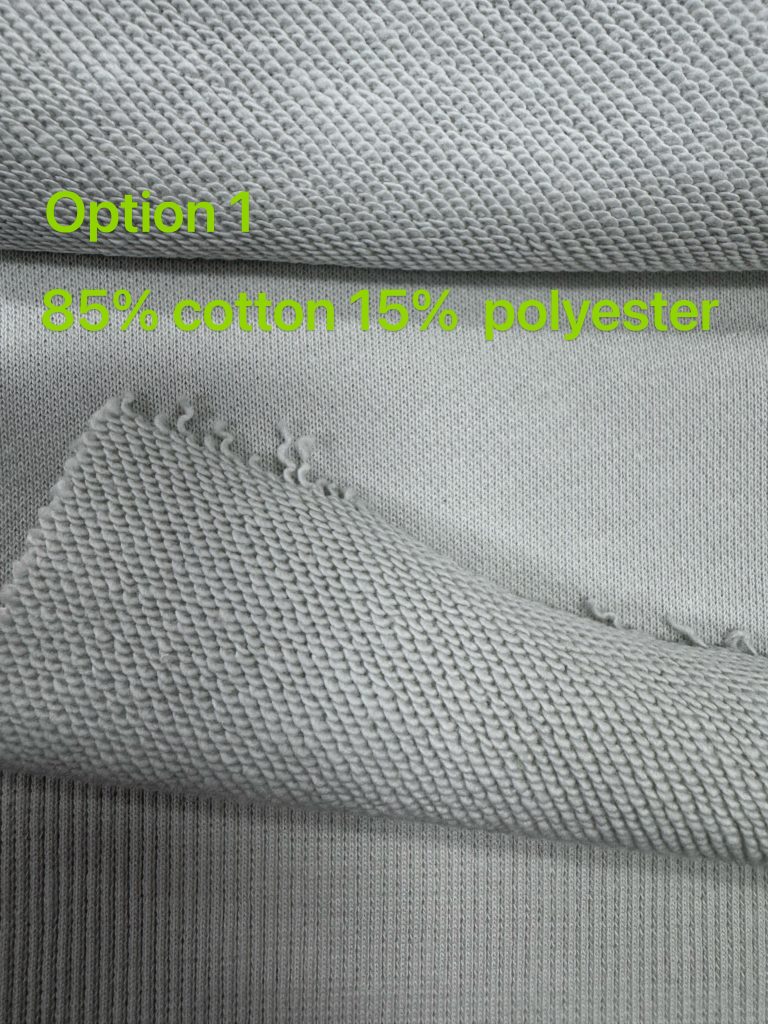
French terry, often called loopback, has visible loops on the reverse rather than the brushed interior being discussed here. CottonWorks explains this looped construction in its guide to single and double knits.
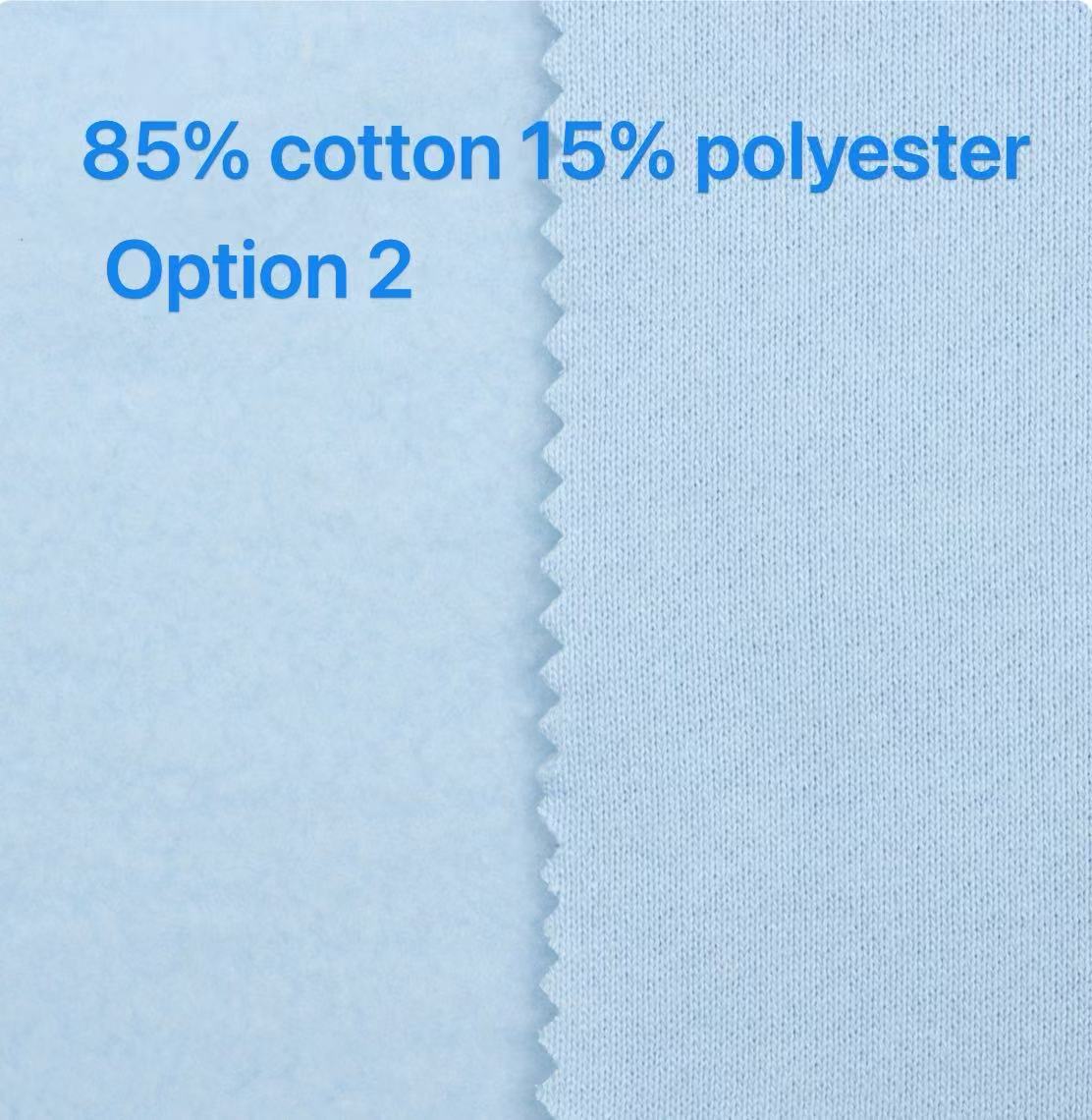
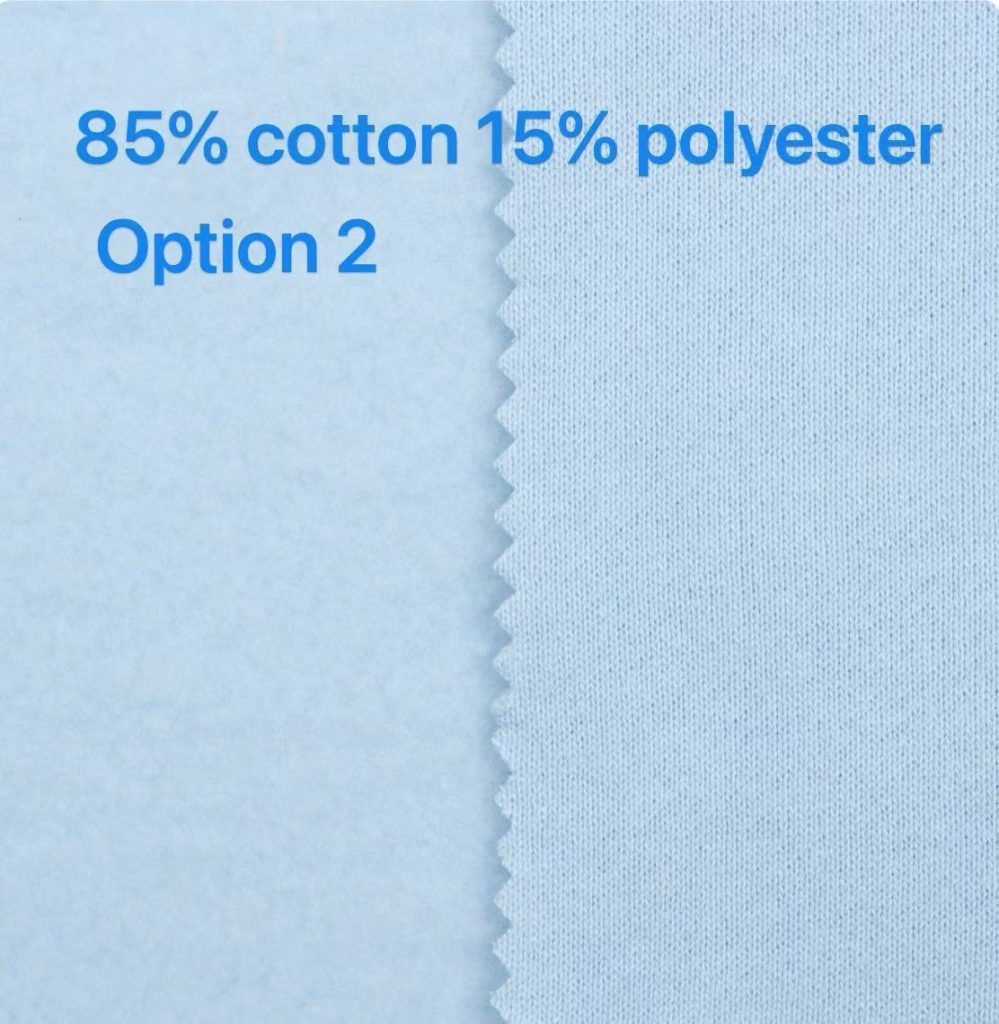
Either name still leaves the fibre specification unresolved. French terry is not automatically 100% cotton, and a cotton-polyester hoodie does not automatically have a brushed back. Supplier terminology can vary, so request photographs of both fabric surfaces and a physical swatch.
| Decision | Brushed sweatshirt fleece | French terry / loopback |
|---|---|---|
| Inner surface | Raised, fuzzy surface in the proposed material | Visible reverse loops in the proposed material |
| First sample question | Does the brushed hand match the intended wearer experience? | Do the loops, drape and contact feel suit the garment? |
| Garment review | Examine inner surface appearance, shedding and bulk at joins | Examine loop appearance, snagging and bulk at joins |
| Still needs confirmation | Composition, finished GSM, colour, finish and wash performance | Composition, finished GSM, colour, finish and wash performance |
Neither column is a quality ranking. A loopback hoodie can be deliberately substantial, and a brushed hoodie can be comparatively light. Choose the material you can approve, not the name that sounds more premium.
100% cotton or a cotton-polyester blend?
When cotton content is part of the product brief
A 100% cotton body fabric may be important to your brand positioning or preference for a natural fibre. It can still be developed with quite different surface feels and structures. Specify whether you want a dry outer hand, a softer brushed interior or a particular drape; the composition alone does not choose between them.
Confirm what “100% cotton” describes. The body, hood lining, rib, sewing thread and decoration are separate components. A cotton body with an elastane-containing rib needs an accurately documented bill of materials; do not turn a body-fabric specification into an unsupported claim about every component.
When a blend is worth comparing
A cotton-polyester blend is a material option to evaluate, not shorthand for either “cheap” or “better.” Polyester’s crease resistance and quick-drying properties are among the reasons brands consider it, as Textile Exchange explains. Adding it changes the material being developed, but does not establish a finished hoodie’s drying time or shape retention. Ask what the proposed blend is intended to achieve, then assess the sample against those aims.
Write the fibres beside their percentages. “80/20” without naming which fibre is 80% is an incomplete instruction. Also ask whether the supplier can identify the face and backing yarn specifications: an overall blend percentage does not fully describe the surface receiving a print.
Do not assume a blend is automatically cheaper, shrink-free or resistant to pilling. Request evidence for the particular material and finish rather than transferring a general fibre claim to your garment.
If cotton content, crease recovery or drying behaviour matters to the buying decision, make it a comparison criterion. Agree what will be checked and how; do not approve a substitute simply because its composition label looks similar.
Use GSM to shortlist materials, not to approve them
GSM means grams per square metre: fabric mass per unit area. It is not the weight of the finished hoodie.
For an initial development discussion, a buyer could compare 300, 350 and 400 GSM candidates. These are illustrative comparison points—not fixed industry grades, HaoboMFG stock specifications or promises about warmth. There is no need to force the material into those numbers if a more suitable swatch sits elsewhere.
For published industry examples, CottonWorks’ digital fabric collection includes French terry examples from 230 to 330 GSM and fleece examples from 245 to 360 GSM. Those examples show variety; they do not define the full market range or recommend a weight for your hoodie.
Ask whether each quoted weight refers to finished fabric and whether a garment treatment changes the comparison basis. Agree the measurement method and acceptance tolerance before treating the number as a purchasing specification.
Then examine the garment consequences. A lined hood combines layers; a pocket opening and rib attachment add further local bulk. More weight in the body does not tell you whether the hood sits comfortably or whether a seam feels cumbersome.
Keep T-shirt and hoodie decisions separate. If you are developing a coordinated range, provide a distinct material brief for the T-shirt manufacturing project rather than assigning both garments the same weight description.
Make handfeel something two people can compare
“Soft” could mean a smooth outer face, a lofty brushed interior or a fabric that bends easily. Ask the person choosing the material to identify which sensation matters.
Give candidate swatches simple IDs and compare them alongside one retained reference. Record short, usable comments: “keep this inner feel, but the body needs more drape” is clearer than “make it more luxurious.”
Review the material again after the agreed wash and drying procedure. Keep an unwashed reference so the team can distinguish initial finishing effects from the hand that remains after care.
A useful approval record identifies the swatch, finish, sample version and decision-maker. A photograph can record the surface appearance, but it cannot sign off a tactile preference on the buyer’s behalf.
Compare the cost of a usable garment
A fabric quotation needs more than price per kilogram or metre. Ask for the proposed composition, construction, finished GSM, usable width, colour and finish so you know what is being compared.
A lower price per kilogram does not automatically mean a lower fabric cost per hoodie. Consumption, cutting yield and the pattern matter. A double-layer hood, a larger pocket or a wider body changes the material requirement.
Keep those garment details consistent when comparing options. Otherwise, one quotation may appear cheaper because it quietly uses a different hood lining or rib specification.
Also separate the garment order minimum from material sourcing minimums. A stock colour and a custom-dyed fabric can create different purchasing commitments. Request those conditions before selecting a material for a small launch.
The wider clothing manufacturing cost breakdown covers quotation inclusions. Here, the important question is whether each fabric option can deliver the approved hoodie at the quoted scope—not whether one headline material price is lower.
Wash the sample before calling the fabric approved
A fit approval on an unwashed hoodie is not evidence of its fit after laundering. CottonWorks identifies construction, processing, finishing and garment care among the factors affecting dimensional stability. A “preshrunk” description should therefore prompt a request for the actual process and results, not an assumption of zero change.
Before checking a sample, agree the wash and drying procedure, number of cycles, preparation and measurement method. If a formal test is required, identify the applicable method with the testing provider. Avoid comparing two results obtained under different conditions.
For the hoodie review, record body length, chest width and sleeve length at defined points. Examine hood shape, pocket appearance, rib recovery and seam alignment as well. A body that remains acceptable can still be paired with a hem rib that changes the silhouette.
Set project-specific acceptance criteria before the review. This guide does not prescribe a universal shrinkage percentage or colourfastness grade. Any reported result should identify the sample, material, colour and procedure it represents.
Include decoration in the approval when it affects the product. A print trial on another fabric does not settle its appearance on the chosen hoodie, and a plain swatch does not show how embroidery sits on the finished garment.
During clothing sample development, keep fabric decisions with the fit and construction revisions. If the material changes, identify which earlier approvals need to be reopened.
Hoodie fabric and sample approval checklist
Use this as a sign-off record, not just a list of questions sent by email.
| Approval item | Record before production release |
|---|---|
| Intended product | Style reference, wearer, season, fit and priority handfeel |
| Fabric identity | Supplier or fabric reference; construction; composition; colour; finish |
| Weight | Finished GSM, measurement basis and agreed tolerance |
| Components | Body, hood lining, rib and other relevant materials listed separately |
| Colour and handle | Approved physical references and the person responsible for comparison |
| Measurements | Size chart, measurement points, before/after-wash basis and tolerances |
| Wash review | Procedure, cycles, sample ID, actual results and approval decision |
| Surface and decoration | Agreed appearance checks and decorated sample reference, where applicable |
| Quantities | Breakdown by style, colour and size; material sourcing conditions |
| Release control | Latest version, approver, date, open issues and substitution restrictions |
Separate the status of each decision. “Fit approved; bulk fabric pending” is more useful than a blanket “approved” message. If a development sample uses a substitute material, record what it demonstrates and what it cannot approve.
Frequently asked questions
What is the best GSM for a hoodie?
There is no single best weight. Shortlist materials for the intended wearer, season and silhouette, then review the sewn garment. Ask for finished GSM and an agreed tolerance; “heavyweight” alone is not a complete specification.
Is French terry always cooler than brushed fleece?
Do not guarantee that from the fabric names. They describe different inner surfaces, but the actual constructions, weights and finished garments also differ. Compare candidates for the intended use rather than treating either name as a thermal test result.
Is 100% cotton better than an 80/20 blend?
It depends on the product requirements. Confirm that 80/20 means 80% cotton and 20% polyester in the material being proposed, then compare actual handfeel, wash behaviour, surface appearance and cost. Neither composition automatically passes those checks.
Will adding polyester prevent shrinkage or pilling?
Do not accept that as an unconditional claim. The finished material still needs project-appropriate evaluation. Ask what evidence supports the proposed construction and finish, and distinguish supplier statements from results for your own sample.
Can the same hoodie fabric be used for printing and embroidery?
Suitability needs confirmation for the actual artwork, method, surface and garment construction. Request a decorated sample where the result matters. Avoid approving every print or embroidery process from a plain swatch or fibre percentage.
Can a substitute fabric be used for the first sample?
Yes, if its purpose and limitations are agreed. It may help review construction, but it does not establish the chosen bulk material’s handfeel or wash performance. List the approvals still required before production release.
Develop your custom hoodie with HaoboMFG
Planning a hoodie for an overseas fashion label or private-label collection? Ask HaoboMFG to review your design brief and discuss fabric selection, customisation requirements and sample development.
Send a tech pack or reference garment, intended fit, target handfeel, preferred fabric construction, artwork and estimated quantities by style and colour. If you have not chosen between brushed fleece and French terry, describe the product you want rather than committing to a fabric name too early.
A practical development sequence to agree with the team is:
- Review the brief. Identify the design requirements, missing information and proposed development scope.
- Compare fabric options. Confirm the candidate construction, composition, finished weight, colour, finish and sourcing conditions against actual material references.
- Develop and review the sample. Check fit, hood construction, rib, pocket and decoration. Agree which wash or other evaluations are required, who will perform them and how results will be approved.
- Record the production reference. Confirm the selected materials, latest sample, revisions and outstanding approvals before discussing production release. Any substitution needs renewed approval for the details it changes.
For the wider branding scope, see our private-label clothing manufacturing service. Material availability, development fees and timing should be confirmed for your particular brief.
Contact HaoboMFG to discuss custom hoodie fabrics and sampling.