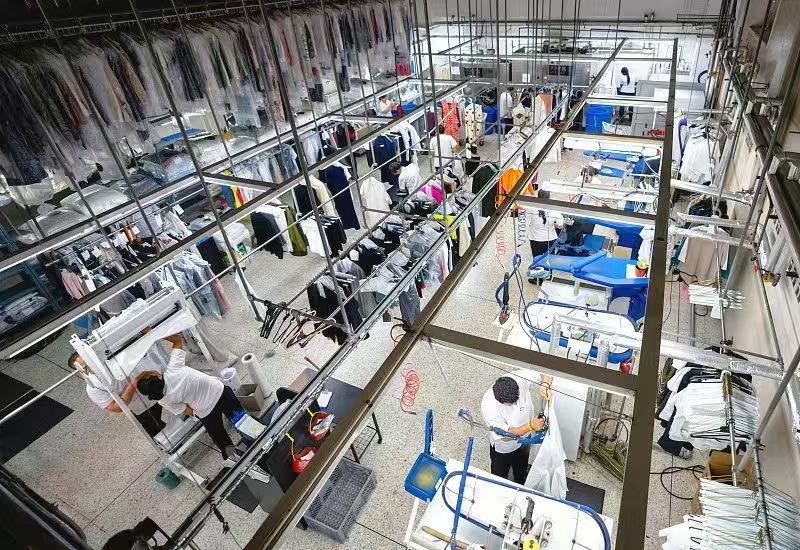
How are clothes made in a garment factory? The sewing process turns accurately cut fabric panels into a wearable garment through a planned sequence of operations, skilled machine work, and quality checks. In this guide, HaoboMFG shows what happens on a real apparel production floor and how fashion brands can prepare a smoother path from approved sample to bulk production.
What is the garment factory sewing process?
The garment factory sewing process is the controlled assembly of cut panels, trims, and labels into a finished item. Each operation is assigned to the right machine and operator, while production supervisors and the QC team check measurements, seam quality, workmanship, and the approved sample. The exact sequence changes with the garment, but the goal is always the same: repeat the approved fit and construction consistently across the order.
1. Review the approved sample and production information
Before sewing begins, the factory confirms the approved sample, measurements, construction details, fabric, trims, decoration method, labels, and packaging. A complete tech pack and pattern helps the team understand seam allowances, stitch types, grading, and special operations. When a brand starts from a reference image, HaoboMFG can organize the details during clothing sample making and development before bulk cutting.
2. Prepare fabric, trims, and cut panels
Fabric and trims are checked against the confirmed requirements before cutting. The cutting team lays the fabric, positions the markers, and cuts panels in the correct sizes and quantities. Panels are bundled by size, color, and production order so the sewing line receives the right components together. This preparation reduces mix-ups and makes the sewing process easier to track.
3. Set up the garment factory production line
On a garment factory production line, cut panels move through a sequence of sewing and inspection operations. Factory sewing, also called garment stitching, joins those panels into the approved garment shape. The work is divided into operations such as shoulder seams, sleeve setting, side seams, collars, waistbands, pockets, hems, and label attachment. Operators use equipment suited to each operation, including lockstitch, overlock, coverstitch, bartack, or other specialized machines. Supervisors balance the line so each operation keeps pace without rushing the workmanship or changing the approved construction.
4. Sew, inspect, and correct in-line
In-line inspection happens while garments are being sewn, not only at the end. The QC team checks stitch density, seam strength, skipped stitches, puckering, thread trimming, symmetry, measurements, and the placement of labels or decorations. If a problem appears, the team corrects the operation early and isolates affected pieces. This protects consistency and avoids carrying a small sewing issue into the finished shipment.
5. Finish, press, and complete final quality control
After the main sewing operations, garments are trimmed, pressed, cleaned, and checked for loose threads or visible marks. Final QC compares finished pieces with the approved sample and measurement requirements. The team also checks quantity, size ratios, packing instructions, cartons, and shipping marks before release. HaoboMFG uses a professional QC team across material checks, production inspection, final inspection, and packing.
What should a fashion brand confirm before production?
- Sample approval: confirm fit, measurements, fabric, trims, decoration, and labels before bulk cutting.
- Quantity: HaoboMFG supports projects from a minimum order quantity of 50 pieces per style and color, subject to style and material requirements.
- Timing: sample development is normally completed within 15 days after the details are confirmed; bulk production is normally about one month after sample approval and material confirmation.
- Quality standard: provide measurement tolerances, workmanship references, and any inspection or packing requirements in writing.
- Communication: share clear feedback with photos, marked measurements, and a prioritized list of changes after each sample review.
How HaoboMFG supports clothing brands
HaoboMFG supports the complete apparel development path: design coordination, fabric and trim sourcing, pattern making, sample development, cut-and-sew production, quality control, packing, and worldwide delivery. Our apparel manufacturing services are designed for brands that need a practical partner from first reference to production-ready shipment. For smaller launches, see our low MOQ clothing manufacturing option.
Ready to discuss your garment?
Send a reference image, tech pack, target quantity, fabric requirements, and destination through the HaoboMFG contact page. We can confirm the next sampling step, production fit, timing, and quality-control plan for your collection.
Choosing a garment stitching factory: what to check before booking a line
A sewing video can show an operation, but it cannot prove an entire order’s capacity, quality or delivery date. When comparing garment stitching factories, ask how your approved sample will be handed to the production line and how deviations will be recorded.
- Before cutting: approve the fabric, size chart, color breakdown, construction notes and reference sample in writing.
- During sewing: agree which measurements and seam details need in-line checks, how defects are separated, and who approves a correction.
- Before shipment: confirm final inspection, size ratios, labels, packing instructions and any buyer-appointed inspection requirements.
Sample room or garment factory production line?
A sample room develops and revises a garment’s fit and construction. A production line repeats the approved operations across a bulk order. An attractive first sample is therefore only one checkpoint: the brand and factory must also agree on materials, measurements and quality requirements for bulk production.
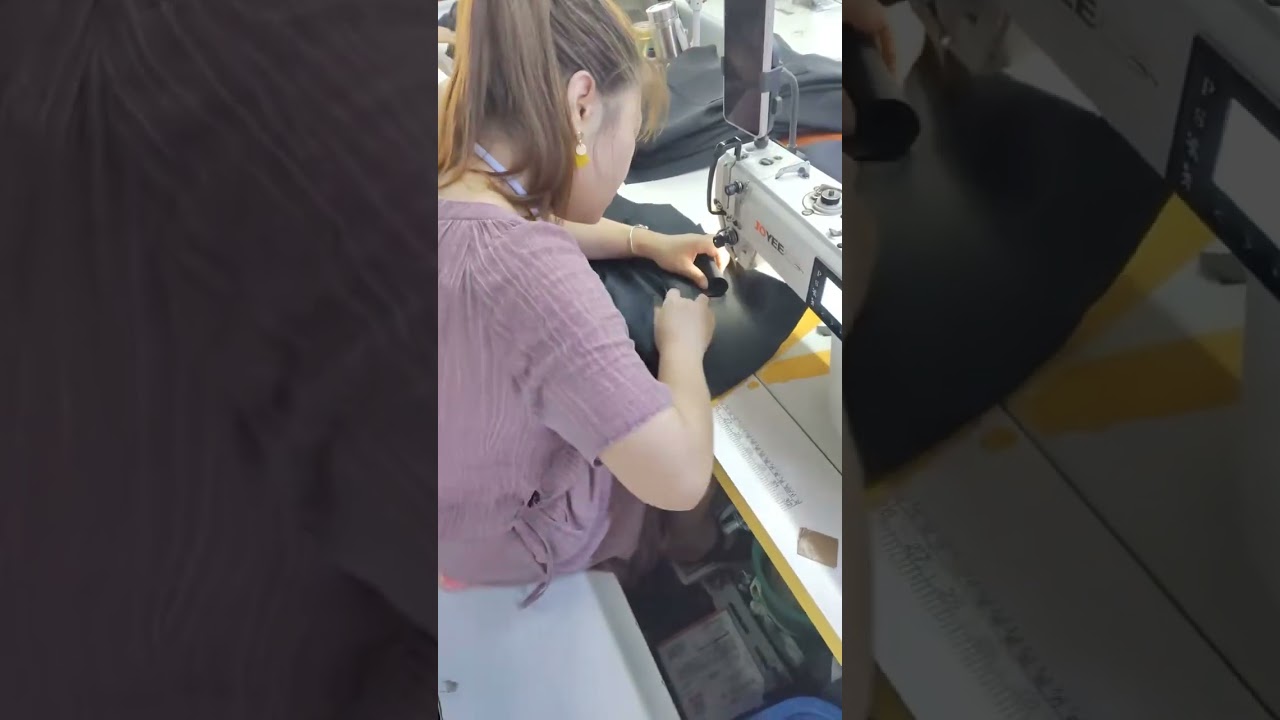
What does the factory sewing video show?
The HaoboMFG video on this page shows a close-up of a worker sewing during garment production in Foshan. It illustrates a sewing operation; it is not a complete factory audit or a demonstration of every production stage.
For a project review, send the garment category, tech pack or sample photos, quantity by color and size, fabric requirements and destination. HaoboMFG can review sampling and cut-and-sew feasibility before confirming a quote and schedule.